And by cooler, I don’t mean hipper. I mean that simmering happens at a lower–i.e. less hot, thereby cooler–temperature than boiling. Joking aside, simmering is a cooking technique, whereby a liquid is brought to and maintained at just below its boiling point. Often, a recipe will call for bringing the liquid to a boil and reducing the heat until the liquid begins to simmer.
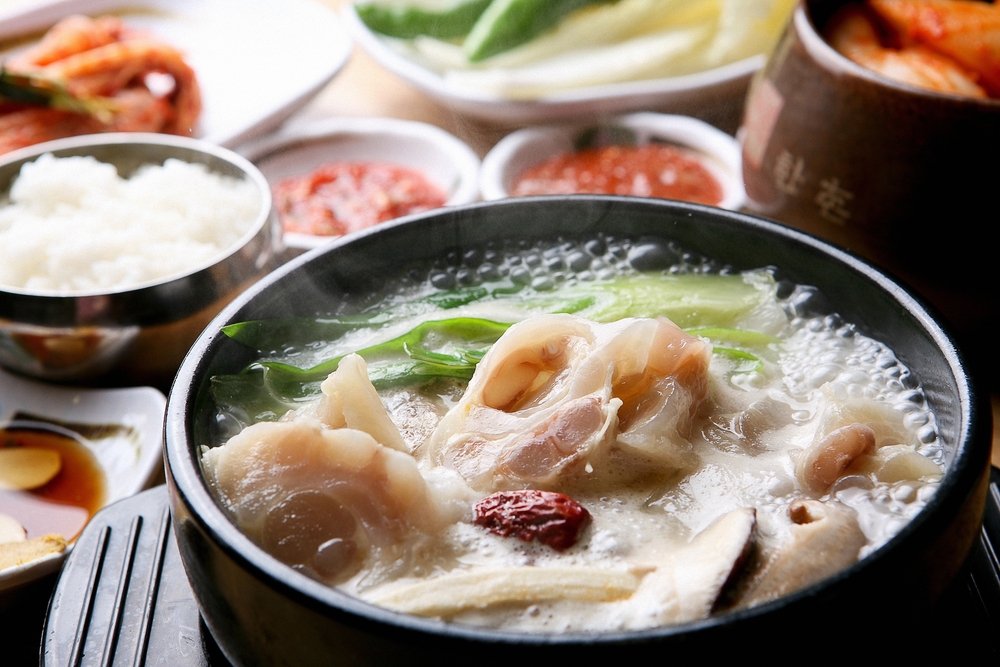
For the most part, the temperature range at which simmering occurs is between 180 deg. F and 210 deg. F, which is between the poaching temperature and the boiling temperature. Visually, simmering is achieved when small bubbles break the surface of the cooking liquid.
There are several reasons to simmer rather than boil certain foods. One reason is to prevent the cooking liquid from evaporating too quickly. Another reason is to keep softer, more fragile foods from breaking apart during the cooking process. Also, certain meats get tougher when cooked at higher temperatures: low and slow for several hours helps to break down collagen in tougher cuts of meat.
Many devices used for cooking are designed to facilitate maintaining a simmer temperature throughout the cooking process. Slow cookers utilize simmer temperatures to cook foods over several hours. Ranges often have a simmer setting on at least one of the cooktop burners or a simmer burner that has a low wattage element (electric) or low BTU nozzle (gas) to prevent the burner from getting too hot.
However, there are times when boiling is better than simmering. For example, sauce reductions fair better at higher temperatures, because the liquid in the sauce evaporates more quickly at the boiling point. Also, vegetables cook faster at the liquid’s boiling point, and there are no pesky proteins to denature and make the vegetables tough. So, sometimes boiling is the preferred cooking technique over simmering. It is important to understand why and when to use both.
Another consideration when choosing to simmer rather than boil is cooking time. Simmering is often a longer cooking process than boiling. Typically, the boiling process is completed in minutes, whereas the simmering process may take several hours. Keep this in mind when meal planning, because it will affect how quickly a dish is ready to serve.
In all, simmering is a cooking technique that is employed when a rapid boil or a high temperature will adversely affect the outcome of the finished dish. A low and slow simmer will keep fragile foods intact and make collagen-rich foods tender and juicy.